Back to Articles

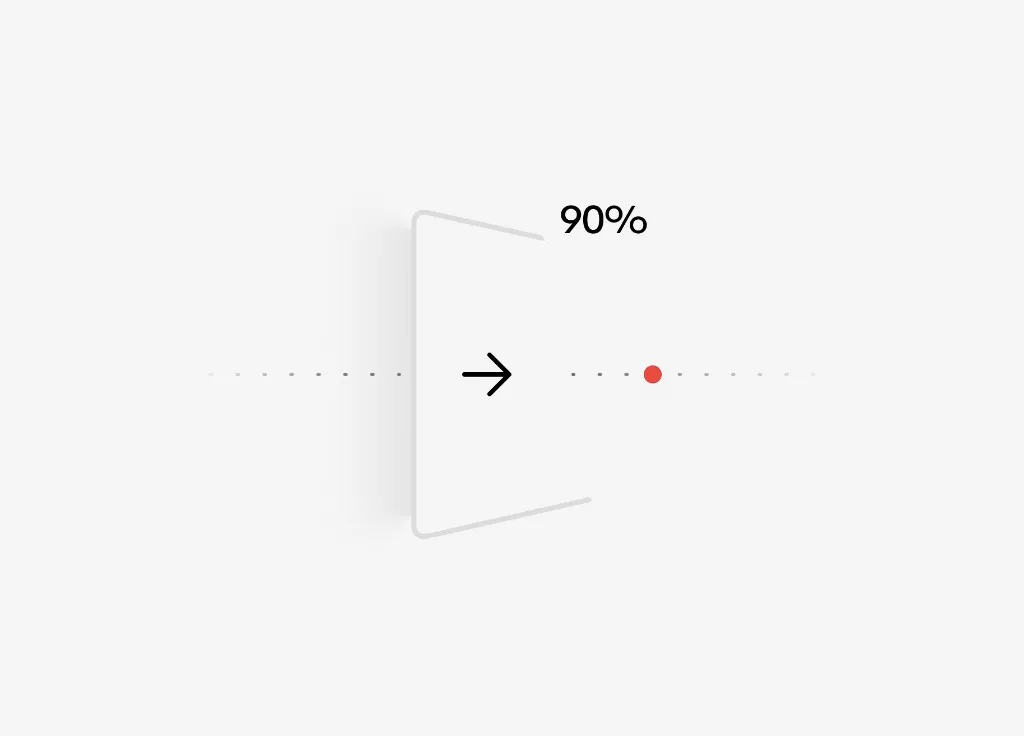
Here’s a stat worth getting right: according to Google’s own mobile page speed research, based on an analysis of 11 million mobile landing pages, the probability of a visitor bouncing increases by 90% as load time goes from 1 to 5 seconds. That’s not “90% of people leave.” It’s a 90% increase in the odds of them leaving. Small difference in wording, big difference in meaning, but the takeaway lands the same either way: speed matters, a lot.
Speed gets most of the blame because it’s easy to measure. But three things are actually happening at once in those first few seconds:
- How fast the page loads
- What it looks like the instant it appears
- Whether it feels trustworthy, before anyone reads a word
How much is slow loading actually costing you?
More than half the mobile web is still failing Google’s own speed test. According to the 2025 HTTP Archive Web Almanac, the annual state-of-the-web report built on July 2025 data from over 16 million sites, only 48% of mobile websites and 56% of desktop websites currently pass all three of Google’s Core Web Vitals. That means most small business websites right now are failing the exact bar Google uses to judge a good experience, and mobile has consistently trailed desktop by 7 to 9 points every year since the standard was introduced.
Does a website’s appearance really make a difference that quickly?
Yes. People judge a website’s look in about 50 milliseconds, faster than a blink. That comes from a well-known study by Lindgaard, Fernandes, Dudek, and Brown, published in the journal Behaviour and Information Technology. It’s an older study, but nothing since has overturned it, including later research from Google itself, which found the same thing: people decide if a site looks right almost instantly.
What this means in practice: someone can decide to leave before they’ve read a single sentence. A fast site that still looks outdated or cluttered can lose visitors just as fast as a slow one.
Do people decide if they trust a site that quickly too?
Yes, and it’s based on the same first look, not the words on the page. Stanford’s Web Credibility Research, led by B.J. Fogg, is built on guidelines drawn from studies involving over 4,500 people, and its sixth guideline states it directly: people quickly evaluate a site’s credibility by visual design alone, before reading any content. Later research, including ongoing work from the Nielsen Norman Group, keeps finding the same handful of things build trust fast: a clean, professional design, a clear “who we are,” content that feels current, and real contact information instead of vague claims.
So what’s actually happening in those first few seconds?
All three things at once:
- Your visitor’s brain judges the look of your site in about 50 milliseconds
- That same judgment quietly decides whether the site feels trustworthy
- Meanwhile, load time is deciding whether they even stick around long enough for any of that to matter, and right now, more than half of mobile sites are failing that first test before the other two ever get a chance
That’s the real story behind “the first 5 seconds.” It’s not one dramatic moment. It’s several fast, overlapping snap judgments, stacked against a majority of small business websites that haven’t caught up to current performance standards yet.
Want to know exactly where your site stands?